Renting in Sweden: deposits and checks before you pay
Check the home and the person renting it out before sending money. Put deposit terms in writing and keep evidence of payments and the home's condition.
Before you send money
This guide covers checks and deposit records for people renting a home in Sweden. It is especially useful when responding to a private rental advert.
The Swedish Police (Polisen) give specific advice on rental scams.
- Check the person’s identity. Find their telephone number independently and compare it with the advert.
- Check with the property owner that the person holds the flat and has permission to sublet it.
- See the home and sign a written contract before paying in advance.
- Avoid anonymous payment services.
Find the property owner’s contact details yourself. Polisen warns that links supplied by a supposed landlord can lead to fake websites and an accomplice’s telephone number.
Be cautious if someone cannot meet you but still demands advance payment. A warning sign is a reason to check further, not proof that a particular person committed a crime.
Our second-hand rental guide explains permission and rent rules for an ordinary rental flat.
Put the deposit terms in writing
A security deposit is money held against possible claims under the rental agreement. Before paying, ask what it covers and how it differs from rent paid in advance.
Boden municipality’s rental guidance recommends recording the amount, payment date and repayment terms in the contract. Use these questions when checking your agreement.
- How much is the deposit, and when must you pay it?
- Who receives it, and what can it be used for?
- When and how will the remaining money be returned?
- How will any proposed deduction be explained?
These are practical checks. A written term does not by itself settle whether a charge is lawful.
Keep the signed agreement and proof of payment. The Swedish Consumer Agency (Konsumentverket) explains that a written agreement makes it easier to show what was agreed.
Record the home’s condition
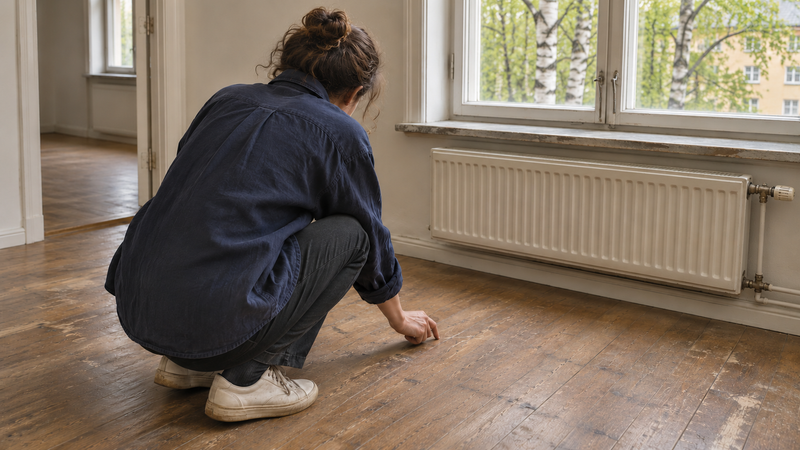
Ask for a written inspection record when moving in and out. Check it before signing and keep a copy. For a furnished home, also check the inventory of included items. Boden’s guidance recommends these records.
For a sublet rental flat, Konsumentverket distinguishes damage from normal wear. What counts as normal wear depends on the circumstances. It is not decided by a fixed rule for every mark or scratch.
If the deposit is not returned
Write to the landlord. State the amount you want returned and why. Refer to the agreement and ask for an explanation of any deductions. Keep a copy of your request and the reply.
For an overdue money claim, the Swedish Enforcement Authority (Kronofogden) explains how to apply for a payment order. An application fee applies.
If the landlord disputes the claim, you can ask for the matter to go to court. Court fees can apply too. A decision does not guarantee recovery if the person has no money or other assets.
If you suspect fraud
Contact your bank promptly and ask whether it can stop the payment. Save payment records and messages.
Report suspected fraud to Polisen on 114 14 or at a police station. Call 112 if the crime is happening now or police are needed urgently at the scene.
A disagreement about a deduction does not automatically establish fraud. Keep the repayment question and any suspected deception distinct when seeking help.